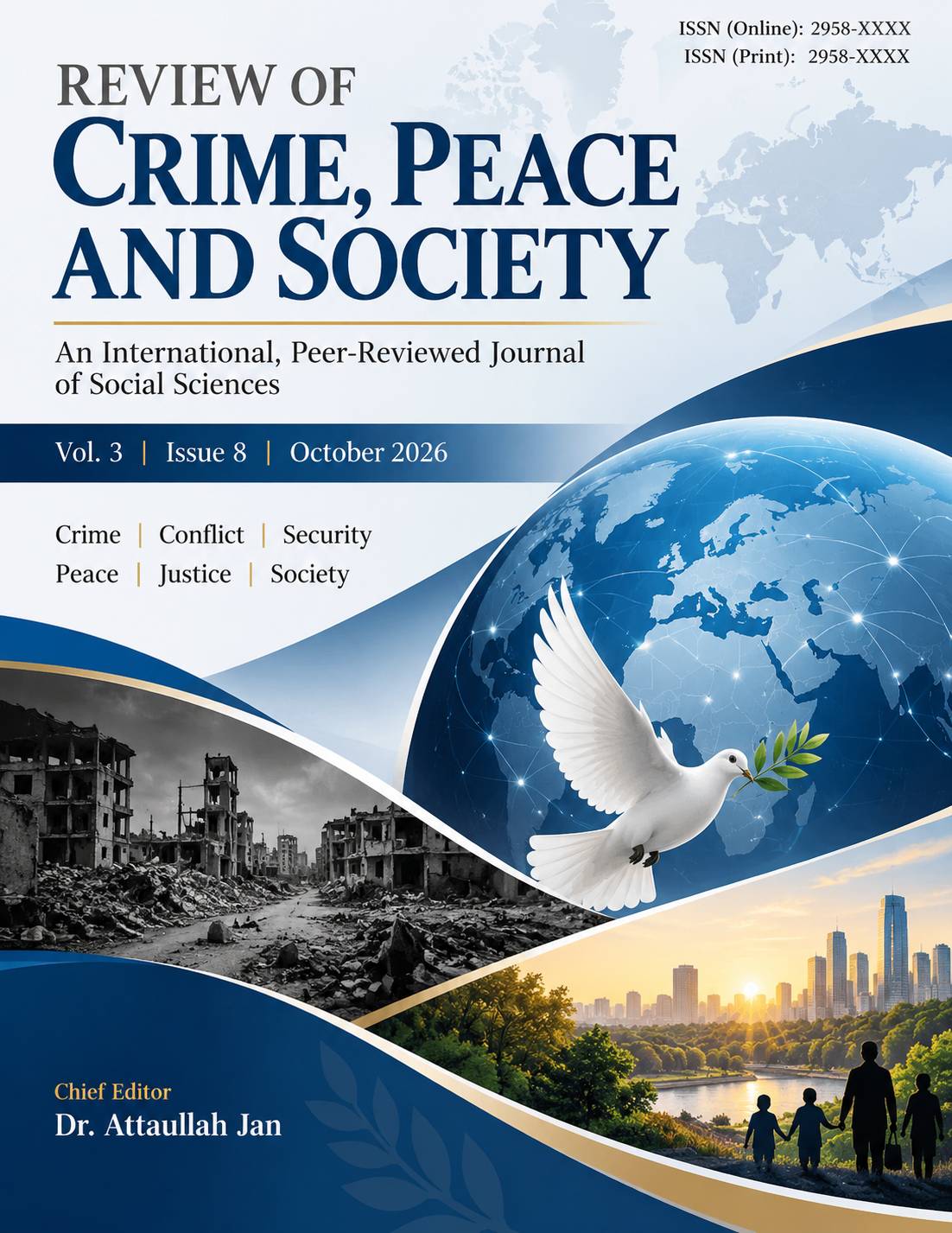
NOT AN ALTERNATIVE: SULH, TAHKIM, AND THE RESTORATION OF ISLAMIC DISPUTE RESOLUTION IN PAKISTAN'S ADR FRAMEWORK
DOI:
https://doi.org/10.71261/rcps/3.8.387Keywords:
Alternative Dispute Resolution; IMAC; Islamic law; Pakistan; Sulh; TahkimAbstract
Comparative ADR literature often treats Islamic mechanisms such as sulh (reconciliation) and tahkim (arbitration) as evidence that Muslims are no strangers to a technique developed elsewhere. This paper argues the relationship runs the other way: reconciliation is not an alternative to litigation in Islamic law but its default, with adjudication reserved for cases reconciliation fails. Reading the Qur'an and Hadith together, the paper traces a graduated argument moving from a command to reconcile, through a preference for settlement over strict rights, to a procedure for appointing arbitrators, and a justice standard governing any outcome. It then examines Pakistan, where the Alternative Dispute Resolution Act 2017 and the International Mediation and Arbitration Center (IMAC) increasingly echo this position. The paper concludes that Pakistan's reforms recover Sulh's place in Islamic law rather than import a foreign technique, and proposes a formal role for qualified scholars on IMAC's mediator panels.
Downloads
Published
How to Cite
Issue
Section
License
Copyright (c) 2026 adminrcps adminrcps

This work is licensed under a Creative Commons Attribution-NonCommercial 4.0 International License.
This is an open access article under the term of Creative Commons Attribution-NonCommercial 4.0 International license (CC BY-NC 4.0). This license permits the users to use, reproduce, disseminate, or display the article in any medium provided that the authors are the original creators and that the reuse is restricted to non-commercial purposes, i.e., is attributed to research or educational use and the work is also properly cited.